Cybersecurity Career Roadmap from Beginner to Expert: A Complete Guide (2026)
Discover the complete cybersecurity career roadmap from beginner to expert. Learn the required skills, certifications, salary, job roles, and career path with expert training from VigyantHub.
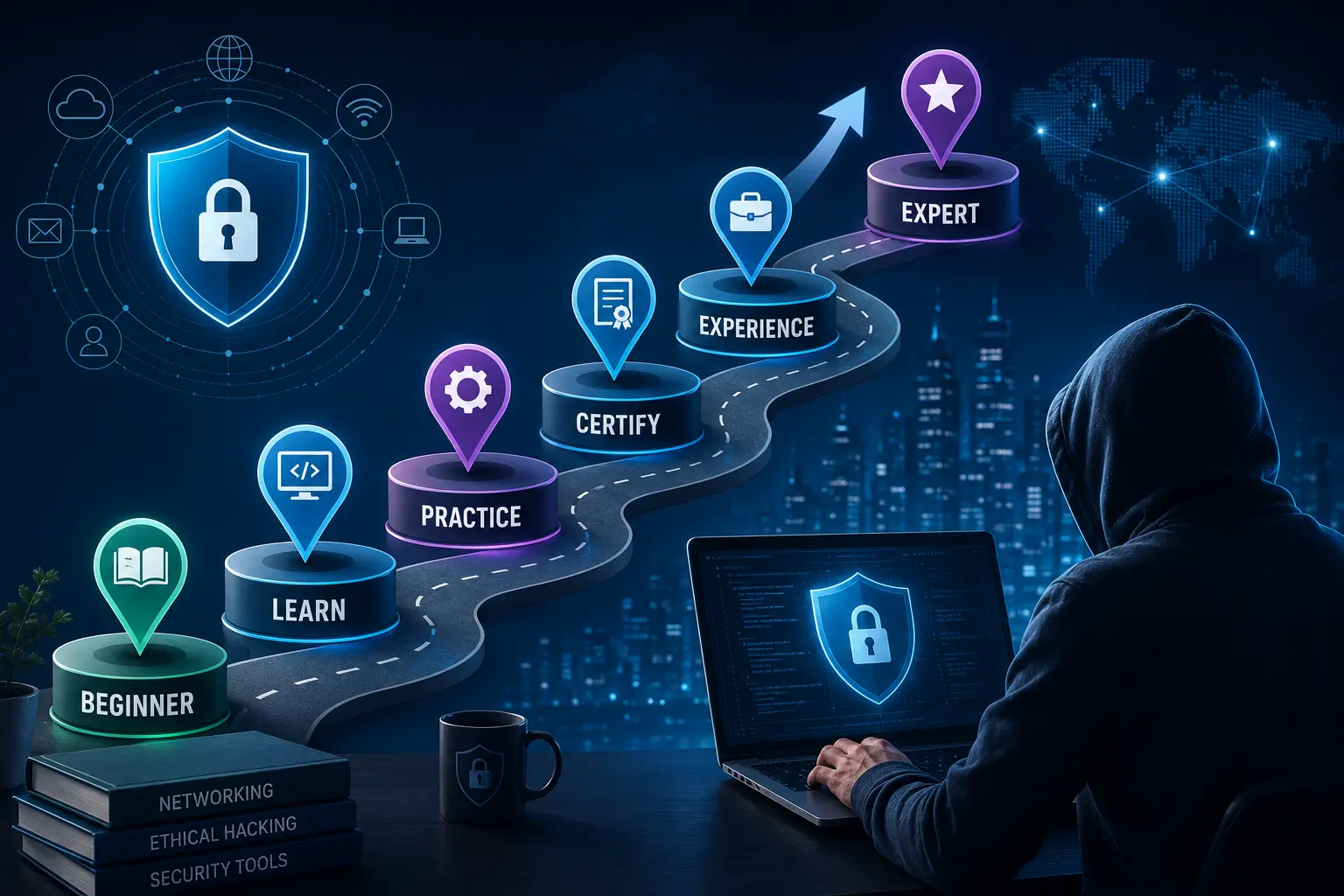
Cybersecurity Career Roadmap from Beginner to Expert: A Complete Guide (2026)
Discover the complete cybersecurity career roadmap from beginner to expert. Learn the required skills, certifications, salary, job roles, and career path with expert training from VigyantHub.
The digital world is expanding rapidly, and so are cyber threats. From ransomware attacks and phishing scams to data breaches affecting millions of users, organizations need skilled cybersecurity professionals more than ever before.
According to industry reports, the global cybersecurity workforce gap continues to grow, creating thousands of job opportunities every year. Whether you're a student, a working professional, or someone looking for a career switch, cybersecurity offers excellent growth, competitive salaries, and global career opportunities.
Join Webinar about
Practical Training & Job-Oriented Courses
Apply for Upcoming Training Intake
This guide explains the complete Cybersecurity Career Roadmap, including the skills you need, certifications to pursue, job roles, salary expectations, and how VigyantHub can help you become an industry-ready cybersecurity professional.
Why Choose Cybersecurity as a Career?
Cybersecurity has become one of the fastest-growing technology domains because every business depends on digital infrastructure.
Top Reasons to Build a Career in Cybersecurity
- High demand across industries
- Excellent salary packages
- Global career opportunities
- Multiple specialization options
- Remote and hybrid work opportunities
- Continuous learning and innovation
- High job security
Whether it's banking, healthcare, government, IT, fintech, e-commerce, or manufacturing, every organization needs cybersecurity experts.
Step 1: Understand Cybersecurity Fundamentals
Before learning advanced ethical hacking or penetration testing, it's important to understand the basics.
Learn:
- Computer Networks
- Operating Systems (Windows & Linux)
- TCP/IP
- DNS
- HTTP/HTTPS
- Firewalls
- VPN
- Basic Programming (Python preferred)
- Database Fundamentals
These concepts create the foundation for every cybersecurity role.
Step 2: Learn Networking
Networking is considered the backbone of cybersecurity.
Focus on understanding:
- OSI Model
- TCP/IP Protocol
- Routing & Switching
- IP Addressing
- Ports & Protocols
- Wireless Networks
- Network Devices
Without networking knowledge, analyzing cyber attacks becomes extremely difficult.
Step 3: Master Linux
Most cybersecurity tools run on Linux.
Important Linux skills include:
- File Management
- User Management
- Bash Commands
- Permissions
- Shell Scripting
- Package Management
Popular distributions:
- Kali Linux
- Ubuntu
- Parrot OS
Step 4: Learn Programming & Scripting
You don't need to become a software developer, but programming helps automate security tasks.
Recommended languages:
- Python
- Bash
- PowerShell
- JavaScript (Basic)
- SQL
Python is especially valuable for automation, malware analysis, and penetration testing.
Step 5: Understand Cybersecurity Domains
Cybersecurity is much broader than ethical hacking.
Major domains include:
Network Security
Protects enterprise networks from attacks.
Application Security
Secures web and mobile applications.
Cloud Security
Protects AWS, Azure, and Google Cloud environments.
Endpoint Security
Secures laptops, desktops, and mobile devices.
Incident Response
Handles cyber attacks after they occur.
Digital Forensics
Investigates cyber crimes.
Governance, Risk & Compliance (GRC)
Ensures organizations follow security standards.
Penetration Testing
Finds vulnerabilities before attackers do.
Step 6: Earn Industry Certifications
Certifications validate your skills and improve your chances of getting hired.
Beginner Certifications
- Google Cybersecurity Certificate
- CompTIA Security+
- Cisco Certified CyberOps Associate
Intermediate Certifications
- Certified Ethical Hacker (CEH)
- CompTIA CySA+
- eJPT
Advanced Certifications
- CISSP
- CISM
- CISA
- OSCP
- CCSP
At VigyantHub, learners receive practical training aligned with globally recognized cybersecurity certifications, helping them build both theoretical knowledge and real-world skills.
Step 7: Build Hands-on Experience
Cybersecurity is a practical field.
Practice using:
- TryHackMe
- Hack The Box
- Capture The Flag (CTF)
- OWASP Juice Shop
- Kali Linux Labs
Create your own home lab to practice penetration testing and vulnerability assessment safely.
Step 8: Learn Security Tools
Popular cybersecurity tools include:
- Wireshark
- Nmap
- Burp Suite
- Metasploit
- Nessus
- Hydra
- John the Ripper
- Nikto
- Aircrack-ng
- Splunk
Hands-on experience with these tools is often expected during technical interviews.
Step 9: Choose Your Career Specialization
Once you have foundational knowledge, choose a specialization.
|
Career Role |
Experience |
|
SOC Analyst |
Beginner |
|
Security Analyst |
Beginner |
|
Vulnerability Assessment Analyst |
Beginner |
|
Penetration Tester |
Intermediate |
|
Ethical Hacker |
Intermediate |
|
Incident Response Analyst |
Intermediate |
|
Security Engineer |
Intermediate |
|
Cloud Security Engineer |
Advanced |
|
Security Architect |
Expert |
|
Cybersecurity Consultant |
Expert |
|
Chief Information Security Officer (CISO) |
Leadership |
Step 10: Keep Learning
Cyber threats evolve every day.
Stay updated through:
- Security blogs
- Threat intelligence reports
- Cybersecurity conferences
- Security communities
- Research papers
- Practice labs
Continuous learning is the key to becoming an expert.
Cybersecurity Career Roadmap (Timeline)
0–3 Months
- Networking Fundamentals
- Linux Basics
- Cybersecurity Basics
- Python Basics
3–6 Months
- Security Tools
- TryHackMe Labs
- Capture The Flag Challenges
- Build Projects
6–12 Months
- CEH Certification
- Security Projects
- Portfolio Development
- Resume Building
1–3 Years
- SOC Analyst
- Security Analyst
- Penetration Tester
3–7 Years
- Security Engineer
- Cloud Security Engineer
- Incident Response Specialist
7+ Years
-
Security Architect
- Cybersecurity Consultant
- CISO
Essential Skills Every Cybersecurity Professional Needs
Technical Skills
- Networking
- Linux
- Windows Administration
- Python
- Cloud Security
- Risk Assessment
- SIEM
- Vulnerability Assessment
- Penetration Testing
Soft Skills
- Critical Thinking
- Problem Solving
- Communication
- Documentation
- Analytical Mindset
- Team Collaboration
Average Cybersecurity Salaries in India (Approx.)
|
Job Role |
Average Annual Salary |
|
SOC Analyst |
₹4–7 LPA |
|
Security Analyst |
₹5–9 LPA |
|
Ethical Hacker |
₹6–12 LPA |
|
Penetration Tester |
₹7–15 LPA |
|
Security Engineer |
₹8–18 LPA |
|
Cloud Security Engineer |
₹12–25 LPA |
|
Security Architect |
₹25–45+ LPA |
Salary depends on skills, certifications, experience, and organization.
Why Learn Cybersecurity with VigyantHub?
At VigyantHub, learning goes beyond theory. Our training programs are designed to prepare learners for real-world cybersecurity challenges through practical exposure and industry-focused instruction.
What You Get
- Industry-aligned curriculum
- Hands-on lab sessions
- Experienced trainers
- Certification-focused preparation
- Live projects and case studies
- Interview preparation
- Career guidance
- Placement assistance
- Flexible learning options
Whether you're starting your cybersecurity journey or planning to advance into ethical hacking, cloud security, or information security management, VigyantHub provides the structured learning path to help you achieve your goals.
Conclusion
Cybersecurity is no longer just an IT specialization, it is a critical business function. With increasing cyber threats and a growing demand for skilled professionals, now is the ideal time to build a career in this field.
Start by mastering the fundamentals, gain practical experience, earn globally recognized certifications, and continuously upgrade your skills. With the right guidance, hands-on practice, and industry-focused training from VigyantHub, you can confidently progress from a beginner to an expert cybersecurity professional.
The future of cybersecurity belongs to those who never stop learning and your journey can begin today.

Insights That Shape Better Careers
Modern industries value adaptability, problem-solving, and hands-on experience. Structured learning plays a key role in professional growth.
Cybersecurity Career Roadmap from Beginner to Expert: A Complete Guide (2026) FAQs
Frequently Asked Questions
Welcome back
Our Professional Trending Courses
The most popular picks by professionals, for professionals.

Microsoft Azure Administrator (AZ-104)
Master the skills required to implement, manage, and monitor identity,...
EC-Council Certified Ethical Hacker v13 (CEH v13) Training
The CEH v13 course equips cybersecurity professionals with hands-on skills...

Project Management Professional (PMP)® Training
Master the project management skills required to lead complex projects...
AWS Solution Architect Associate (SAA-C03)
Elevate your career by mastering the ability to design resilient,...