Project Management
Project Management Professional (PMP)® Training
Master the project management skills required to lead complex projects and teams using predictive, agile, and hybrid approaches. This course is fully aligned with the current PMP Examination Content Outline (ECO) and PMBOK® Guide.
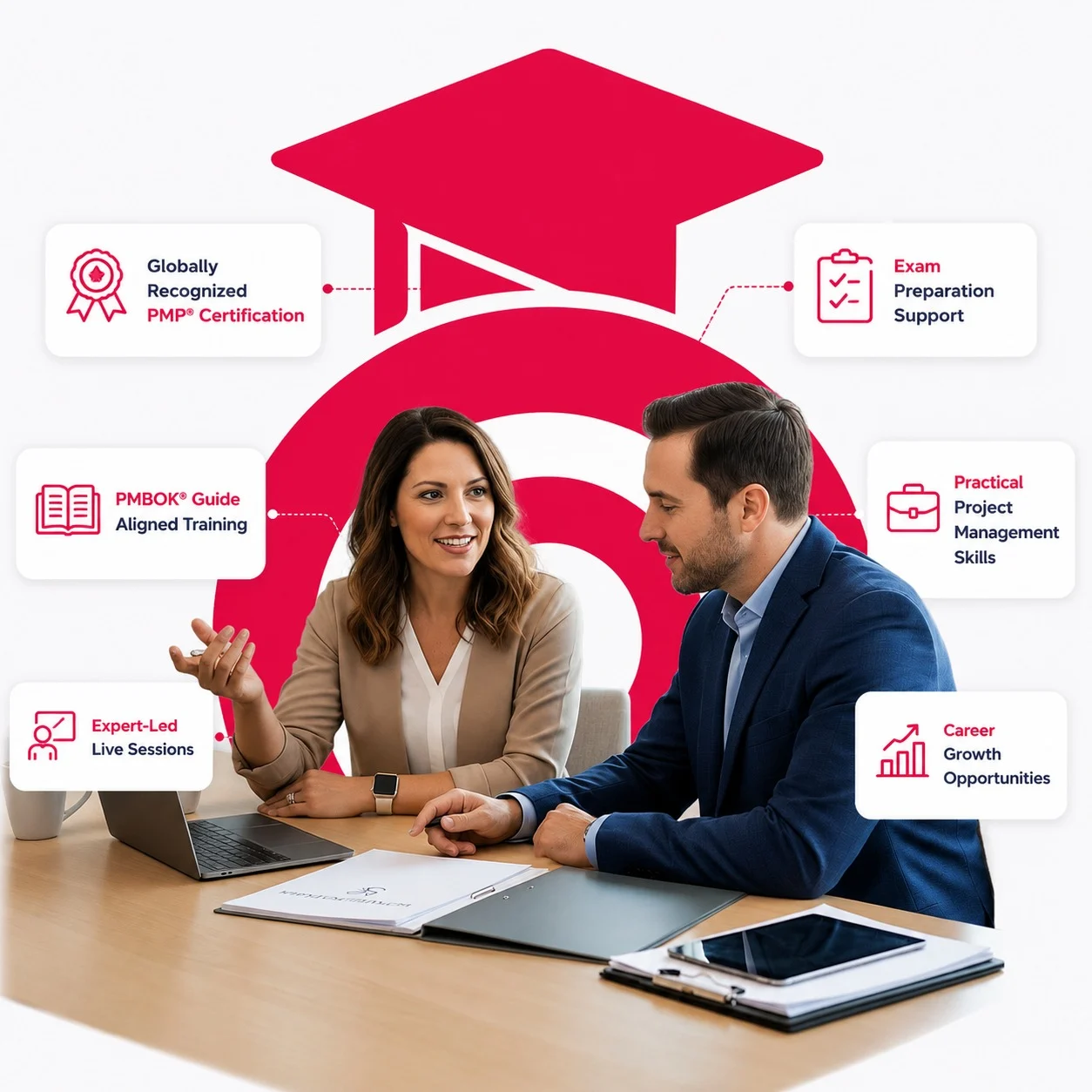
Why Train with Vigyanthub?
We have redefined the training experience by prioritizing your success over batch size.
Elite "Micro-Batch" Learning:
The BOGO Training Advantage:
Official Exam-Ready Kits:
Hyper-Realistic Practice Labs:
Course Overview
The PMP certification is the world's leading project management certification. This intensive training prepares you for the rigorous PMP exam, focusing on the three key domains defined by PMI: People, Process, and Business Environment. You will gain a deep understanding of project leadership, strategic alignment, and the application of diverse project methodologies to deliver organizational value.
Apply for Upcoming Training Intake
Course Curriculum
Project Management Course Overview
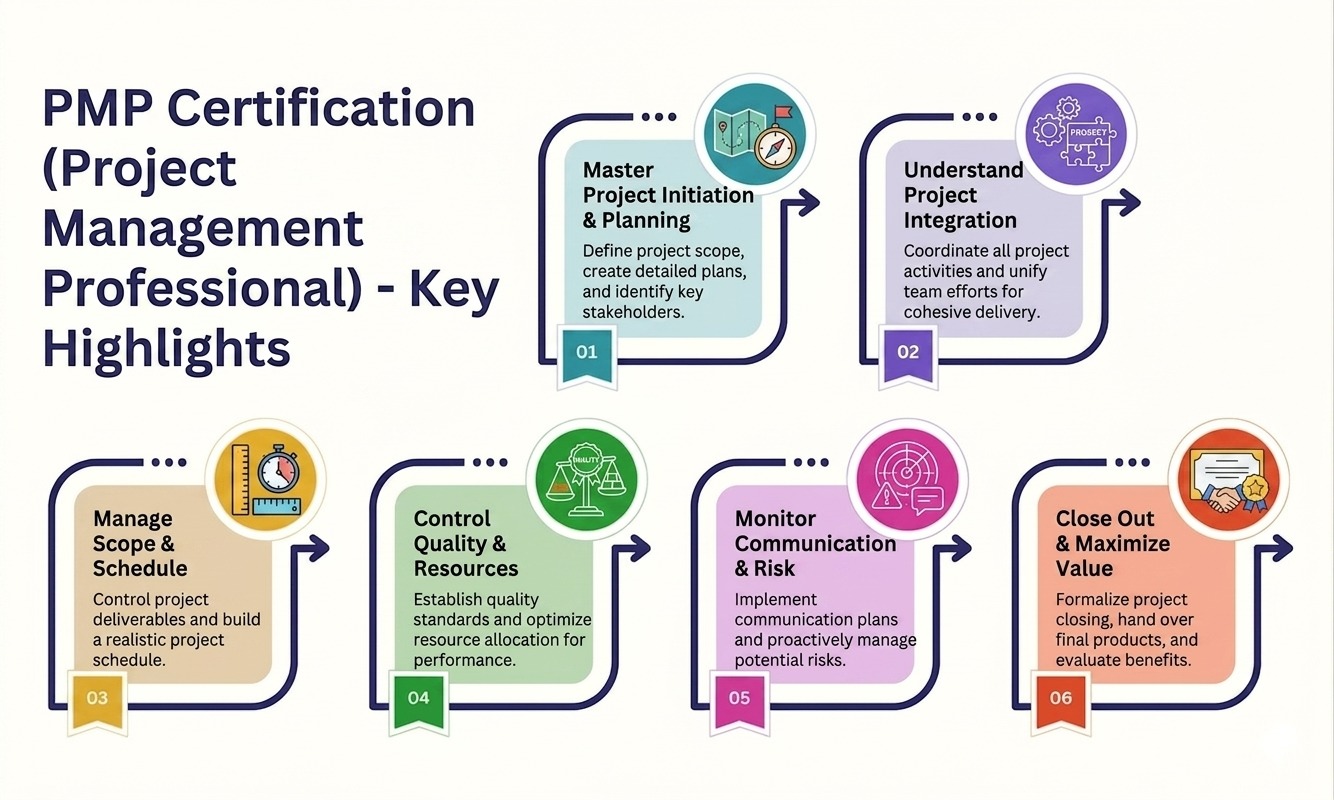
Project Management Professional (PMP)® Training - Key Highlights
Join Now & Get Certified on Your First Attempt

Benefits focused on Individuals and corporate
What are the advantages of Project Management Certification?
Individual Benefits
-
Career Advancement – PMP is globally recognized and often required for senior project management roles.
-
Higher Salary Potential – Certified PMPs earn significantly more than non-certified peers.
-
Global Recognition – Recognized across industries and countries as a standard of project management excellence.
-
Enhanced Skills & Knowledge – Improves planning, execution, risk management, and leadership skills.
-
Better Job Opportunities – Opens doors to roles in diverse industries like IT, construction, healthcare, and finance.
-
Professional Credibility – Demonstrates commitment, expertise, and adherence to PMI standards.
-
Networking Opportunities – Connect with a global community of project managers through PMI chapters.
-
Confidence in Handling Projects – Structured methodology improves efficiency and reduces project failures.
Corporate Benefits
-
Improved Project Success Rates – Certified PMPs bring standardized practices that reduce delays and cost overruns.
-
Increased Efficiency & Productivity – Teams apply proven frameworks, saving time and resources.
-
Better Risk Management – PMP-trained professionals can anticipate and mitigate risks effectively.
-
Enhanced Client Confidence – Clients value organizations with certified project managers for reliability.
-
Competitive Advantage – Organizations with certified staff can win more bids and contracts.
-
Knowledge Transfer & Standardization – PMP knowledge spreads across teams, standardizing processes and best practices.
-
Employee Retention & Motivation – Investing in certifications improves employee satisfaction and loyalty.
-
Alignment with Global Standards – Ensures projects follow globally recognized methodologies, reducing errors and rework.

Live Industry Bootcamp
- LIVE EXPERT SESSIONS
- ABSOLUTELY FREE
- REAL-WORLD INSIGHTS
- INTERACTIVE Q&A
Course Prerequisites
-
A four-year degree (bachelor’s or global equivalent) and 36 months of unique, non-overlapping professional project management experience, OR a high school diploma/associate degree and 60 months of experience.
-
35 contact hours of formal project management education (this course satisfies this requirement).
Join a community of professionals who have mastered
the technical and leadership skills needed to thrive in today’s competitive market.
Project Management Professional (PMP)® Training Course FAQs
Common Questions About Project Management Certification
Get the Project Management Certification
Project Management Professional (PMP)® Training Certificate
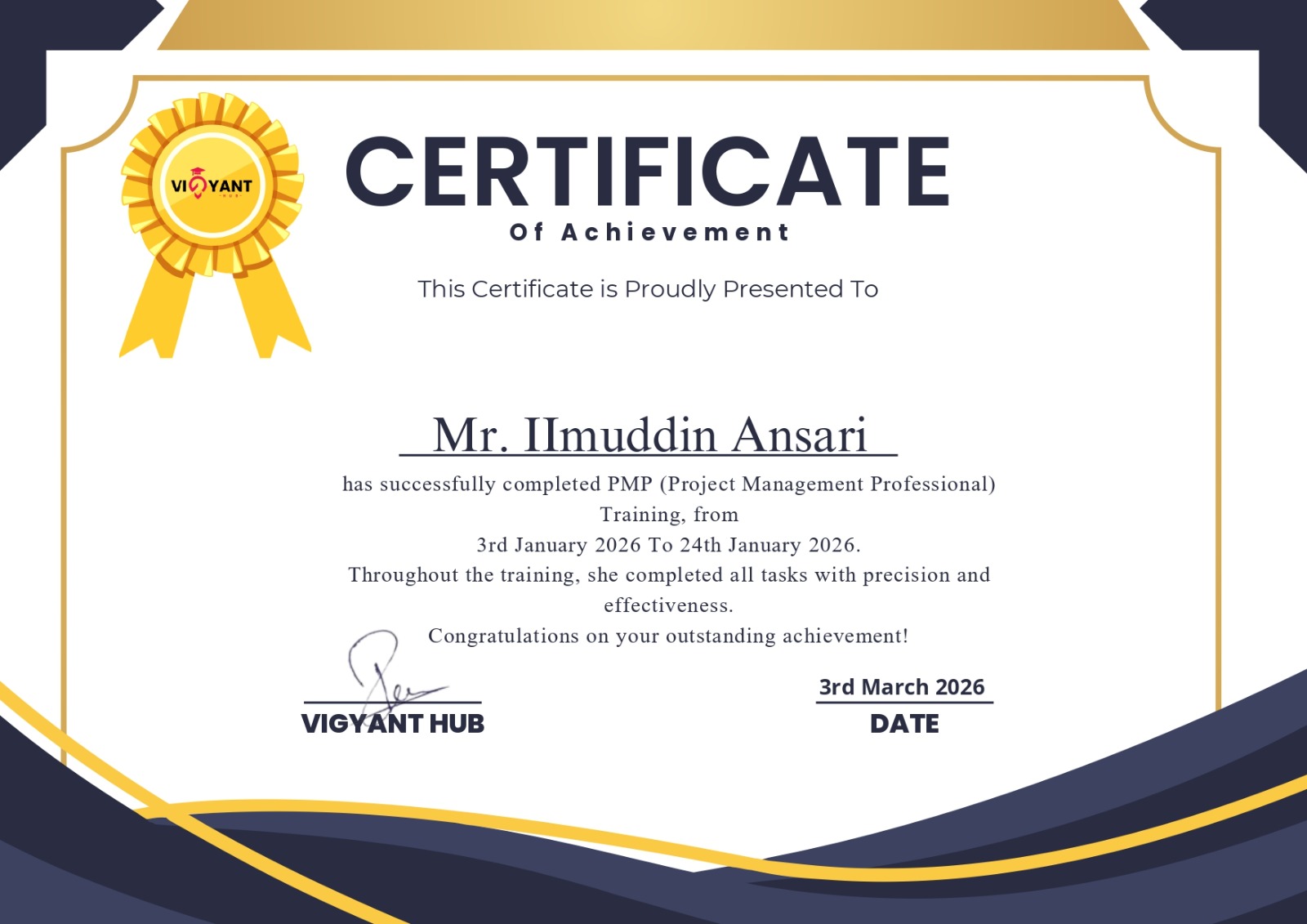



Your 2026 Roadmap starts here.
Transform your potential into a Professional Portfolio
Project Management Professional (PMP)® Training


