project-management
Project Management Professional (PMP)® Training & Certification
PMP training provides 35 hours of formal project management education, covering key concepts like project planning, execution, risk management, Agile and hybrid approaches, and leadership skills. It equips learners with practical tools, frameworks, and exam-focused knowledge aligned with PMI standards.
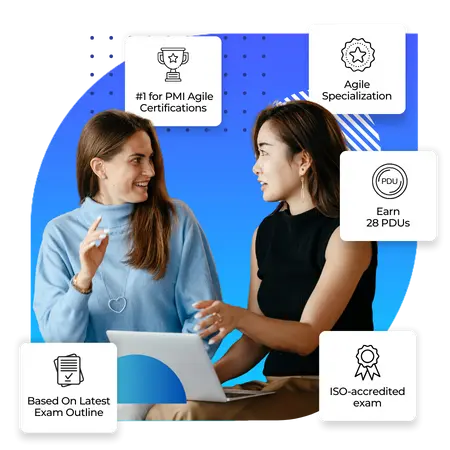
Why Train with Vigyanthub?
We have redefined the training experience by prioritizing your success over batch size.
Elite "Micro-Batch" Learning:
The BOGO Training Advantage:
Official Exam-Ready Kits:
Hyper-Realistic Practice Labs:
Course Overview
PMP training is a comprehensive program designed to build the knowledge and skills needed to successfully manage projects and pass the PMP certification exam. It combines theory, practical application, and exam preparation based on PMI standards.
🔑 Key Highlights:
- Duration: Minimum 35 contact hours (mandatory for eligibility)
- Focus Areas:
- Project planning and execution
- Agile, predictive, and hybrid methodologies
- Risk and stakeholder management
- Leadership and team collaboration
- Learning Style: Mix of concepts, real-world examples, and practice questions
- Goal: Prepare candidates to manage projects effectively and clear the PMP exam
Lorem ipsum dolor sit amet – consectetur adipiscing elit!
Course Curriculum
Manage conflict
• Interpret the source and stage of the conflict
• Analyze the context for the conflict
• Evaluate/recommend/reconcile the appropriate conflict resolution solution
• Lead a team
• Set a clear vision and mission
• Support diversity and inclusion (e.g., behavior types, thought process)
• Value servant leadership (e.g., relate the tenets of servant leadership to the team)
• Determine an appropriate leadership style (e.g., directive, collaborative)
• Inspire, motivate, and influence team members/stakeholders (e.g., team contract,social
contract, reward system)
• Analyze team members and stakeholders’ influence
• Distinguish various options to lead various team members and stakeholders
• Support team performance
• Appraise team member performance against key performance indicators
• Support and recognize team member growth and development
• Determine appropriate feedback approach Verify performance improvements
• Empower team members and stakeholders
• Organize around team strengths
• Support team task accountability
• Evaluate demonstration of task accountability
• Determine and bestow level(s) of decision-making authority
• Ensure team members/stakeholders are adequately trained
• Determine required competencies and elements of training
• Determine training options based on training needs
• Allocate resources for training Measure training outcomes• Build a team
• Appraise stakeholder skills
• Deduce project resource requirements
• Continuously assess and refresh team skills to meet project needs Maintain team and
knowledge transfer
• Address and remove impediments, obstacles, and blockers for the
team
• Determine critical impediments, obstacles, and blockers for the team
• Prioritize critical impediments, obstacles, and blockers for the team
• Use network to implement solutions to remove impediments, obstacles, andblockers for
the team
• Re-assess continually to ensure impediments, obstacles, and blockers for the teamare
being addressed.
• Negotiate project agreements
• Analyze the bounds of the negotiations for agreement
• Assess priorities and determine ultimate objective(s)
• Verify objective(s) of the project agreement is met
• Participate in agreement negotiations Determine a negotiation strategy
• Collaborate with stakeholders
• Evaluate engagement needs for stakeholders
• Optimize alignment between stakeholder needs, expectations, and project objectives
• Build trust and influence stakeholders to accomplish project objectives
• Build shared understanding
• Break down situation to identify the root cause of a misunderstanding
• Survey all necessary parties to reach consensus
• Support outcome of parties' agreement Investigate potential misunderstandings
• Engage and support virtual teams
• Examine virtual team member needs (e.g., environment, geography, culture,global, etc.)• Investigate alternatives (e.g., communication tools, colocation) for virtual team member
engagement
• Implement options for virtual team member engagement
• Continually evaluate effectiveness of virtual team member engagement
• Define team ground rules
• Communicate organizational principles with team and external stakeholders
• Establish an environment that fosters adherence to the ground rules Manage and rectify
ground rule violations
• Mentor relevant stakeholders
• Allocate the time to mentoring
• Recognize and act on mentoring opportunities
• Promote team performance through the application of emotional intelligence
• Assess behavior through the use of personality indicators
• Analyze personality indicators and adjust to the emotional needs of key
projectstakeholders
Execute project with the urgency required to deliver business value
• Assess opportunities to deliver value incrementally
• Examine the business value throughout the project
• Support the team to subdivide project tasks as necessary to find the minimumviable
product
• Manage communications
• Analyze communication needs of all stakeholders
• Determine communication methods, channels, frequency, and level of detail for all
stakeholders
• Communicate project information and updates effectively Confirm communication is
understood and feedback is received
• Assess and manage risks
• Determine risk management options Iteratively assess and prioritize risks
• Engage stakeholders
• Analyze stakeholders (e.g., power interest grid, influence, impact)• Categorize stakeholders
• Engage stakeholders by category
• Develop, execute, and validate a strategy for stakeholder engagement
• Plan and manage budget and resources
• Estimate budgetary needs based on the scope of the project and lessons learnedfrom
past projects
• Anticipate future budget challenges
• Monitor budget variations and work with governance process to adjust as necessary
• Plan and manage resources
• Plan and manage schedule
• Estimate project tasks (milestones, dependencies, story points)
• Utilize benchmarks and historical data
• Prepare schedule based on methodology
• Measure ongoing progress based on methodology
• Modify schedule, as needed, based on methodology Coordinate with other projects and
other operations
• Plan and manage quality of products/deliverables
• Determine quality standard required for project deliverables
• Recommend options for improvement based on quality gaps Continually survey project
deliverable quality
• Plan and manage scope
• Determine and prioritize requirements
• Break down scope (e.g., WBS, backlog) Monitor and validate scope
• Integrate project planning activities
• Consolidate the project/phase plans
• Assess consolidated project plans for dependencies, gaps, and continued businessvalue
• Analyze the data collected
• Collect and analyze data to make informed project decisions Determine critical
information requirements
• Manage project changes
• Anticipate and embrace the need for change (e.g., follow change management practices)• Determine strategy to handle change
• Execute change management strategy according to the methodology Determine a
change response to move the project forward
• Plan and manage procurement
• Define resource requirements and needs
• Communicate resource requirements
• Manage suppliers/contracts
• Plan and manage procurement strategy Develop a delivery solution
• Manage project artifacts
• Determine the requirements (what, when, where, who, etc.) for managing theproject
artifacts
• Validate that the project information is kept up to date (i.e., version control) and
accessible to all stakeholders
• Continually assess the effectiveness of the management of the project artifacts
• Determine appropriate project methodology/methods and practices
• Assess project needs, complexity, and magnitude
• Recommend project execution strategy (e.g., contracting, finance)
• Recommend a project methodology/approach (i.e., predictive, agile, hybrid)
• Use iterative, incremental practices throughout the project life cycle (e.g.,
lessonslearned, stakeholder engagement, risk)
• Establish project governance structure
• Determine appropriate governance for a project (e.g., replicate organizational
governance)
• Define escalation paths and thresholds
• Manage project issues
• Recognize when a risk becomes an issue
• Attack the issue with the optimal action to achieve project success Collaborate with
relevant stakeholders on the approach to resolve the issues
• Ensure knowledge transfer for project continuity
• Discuss project responsibilities within team
• Outline expectations for working environment Confirm approach for knowledge
transfers• Plan and manage project/phase closure or transitions
• Determine criteria to successfully close the project or phase
• Validate readiness for transition (e.g., to operations team or next phase)
• Conclude activities to close out project or phase (e.g., final lessons
learned,retrospective, procurement, financials, resources)
Plan and manage project compliance
• Confirm project compliance requirements (e.g., security, health and safety, regulatory
compliance)
• Classify compliance categories
• Determine potential threats to compliance
• Use methods to support compliance
• Analyze the consequences of noncompliance
• Determine necessary approach and action to address compliance needs (e.g.,risk, legal)
• Measure the extent to which the project is in compliance
• Evaluate and deliver project benefits and value
• Investigate that benefits are identified
• Document agreement on ownership for ongoing benefit realization
• Verify measurement system is in place to track benefits
• Evaluate delivery options to demonstrate value Appraise stakeholders of value gain
progress
• Evaluate and address external business environment changes for
impact on scope
• Survey changes to external business environment (e.g., regulations, technology,
geopolitical, market)
• Assess and prioritize impact on project scope/backlog based on changes inexternal
business environment
• Recommend options for scope/backlog changes (e.g., schedule, cost changes)
Continually review external business environment for impacts on projectscope/backlog
• Support organizational change
• Assess organizational culture
• Evaluate impact of organizational change to project and determine requiredactions
Evaluate impact of the project to the organization and determine required actions
project-management Lorem Ipsum Overview
Project Management Professional (PMP)® Training & Certification - Lorem Ipsum Highlights
Lorem ipsum dolor sit amet, sed do eiusmod tempor incididunt ut labore.

Benefits focused on Individuals and corporate
What are the advantages of Lorem Ipsum project-management Certification?
Individual Benefits
-
Career Advancement – PMP is globally recognized and often required for senior project management roles.
-
Higher Salary Potential – Certified PMPs earn significantly more than non-certified peers.
-
Global Recognition – Recognized across industries and countries as a standard of project management excellence.
-
Enhanced Skills & Knowledge – Improves planning, execution, risk management, and leadership skills.
-
Better Job Opportunities – Opens doors to roles in diverse industries like IT, construction, healthcare, and finance.
-
Professional Credibility – Demonstrates commitment, expertise, and adherence to PMI standards.
-
Networking Opportunities – Connect with a global community of project managers through PMI chapters.
-
Confidence in Handling Projects – Structured methodology improves efficiency and reduces project failures.
Corporate Benefits
-
Improved Project Success Rates – Certified PMPs bring standardized practices that reduce delays and cost overruns.
-
Increased Efficiency & Productivity – Teams apply proven frameworks, saving time and resources.
-
Better Risk Management – PMP-trained professionals can anticipate and mitigate risks effectively.
-
Enhanced Client Confidence – Clients value organizations with certified project managers for reliability.
-
Competitive Advantage – Organizations with certified staff can win more bids and contracts.
-
Knowledge Transfer & Standardization – PMP knowledge spreads across teams, standardizing processes and best practices.
-
Employee Retention & Motivation – Investing in certifications improves employee satisfaction and loyalty.
-
Alignment with Global Standards – Ensures projects follow globally recognized methodologies, reducing errors and rework.

Lorem ipsum events – ut labore et dolore magna!
- LIVE EXPERT SESSIONS
- ABSOLUTELY FREE
- REAL-WORLD INSIGHTS
- INTERACTIVE Q&A
Course Prerequisites
You must meet education + project management experience + training hours requirements. There are two tracks:
1. If you have a four-year degree (bachelor’s or global equivalent):
- Project Management Experience: Minimum 36 months leading projects
- Project Management Education: 35 contact hours (formal training)
2. If you have a high school diploma, associate degree, or global equivalent:
- Project Management Experience: Minimum 60 months leading projects
- Project Management Education: 35 contact hours
Lorem ipsum dolor sit amet, consectetur adipiscing elit?
Sed do eiusmod tempor incididunt ut labore
Project Management Professional (PMP)® Training & Certification Course FAQs
Common Questions About Lorem Ipsum Certification
Get the Lorem Ipsum project-management Certification
Project Management Professional (PMP)® Training & Certification Certificate

Your 2026 Roadmap starts here.
Transform your potential into a Professional Portfolio
Project Management Professional (PMP)® Training & Certification